
Katseye Piano Game Tiles
titik nolMusic
2.413.00 Reviews
- Version
- 2.0
- Installs
- 50.00K
- Age Rating
- Everyone
Screenshots
Our Review of Katseye Piano Game Tiles
 Analysis by Appyee
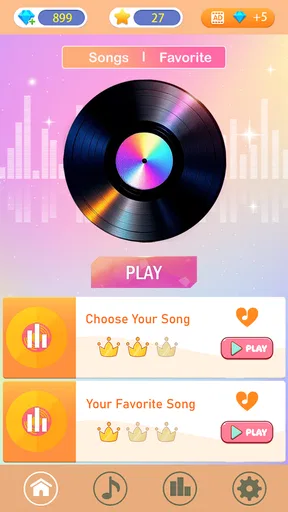
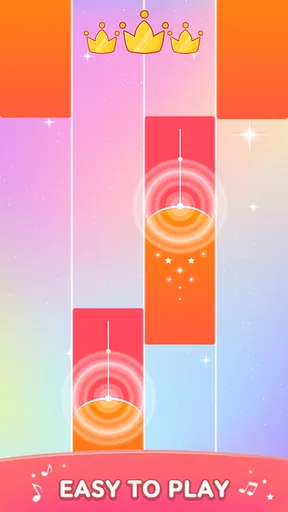
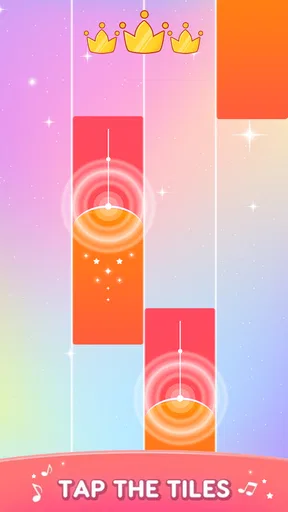
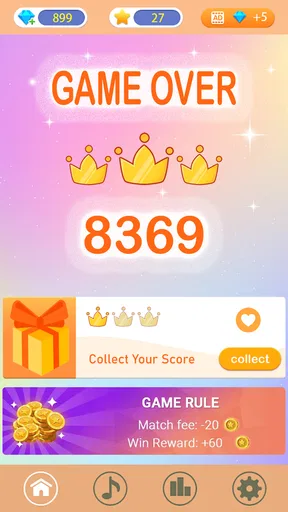
I spent time with Katseye Piano, a free music game from titik nol that turns piano-style tapping into a quick way to interact with songs. Its basic idea is easy to understand: notes appear on the screen and I try to keep up with the rhythm. That simplicity makes it approachable, especially when I want something I can pick up without reading instructions first.
The game is listed for Everyone and runs on Android devices using version 6.0 or later. It reached version 2.0 after its release on March 20, 2024, and has attracted over 50 thousand installs. Those details place it firmly in the casual mobile-game space rather than the serious music-learning market. I would approach it as a lightweight rhythm diversion, not as a replacement for piano lessons or a full instrument simulator.
How the piano-tile idea works in everyday play
What I like most about this kind of game is the short commitment. I can play for a few minutes while waiting for an appointment, take a break between tasks, or hand the phone to someone who wants an immediately understandable challenge. The piano presentation gives each round a musical identity, while the tile-tapping format keeps the controls familiar even for someone who rarely plays mobile games.
The first useful habit is to watch the movement of the notes rather than stare at a single point on the screen. Looking slightly ahead helps me prepare my next tap and reduces the frantic feeling that comes from reacting at the last possible moment. On a smaller phone, I also found it more comfortable to hold the device securely with both hands, leaving my thumbs ready for quick changes across the play area.
That approach matters because the challenge is not simply pressing buttons. Timing, attention and hand position work together. A player who taps quickly but ignores the rhythm can lose control, while someone who settles into the song’s pace often performs more consistently. The game is therefore accessible at the surface but still has a modest skill curve for anyone trying to improve.
A practical routine for short sessions
My preferred routine is to begin with one relaxed attempt instead of immediately chasing a perfect result. That first run tells me whether the screen feels responsive and whether the current pace suits my concentration. I then focus on one improvement, such as looking farther ahead or keeping my tapping hand from drifting. This makes each session feel more purposeful than repeatedly restarting without changing anything.
Another useful trick is to reduce distractions before playing. Notifications, background conversation and a slippery grip can matter more in a rhythm game than in a slower puzzle. If I am playing during a commute or in a noisy room, I rely more heavily on the visual flow. In a quiet setting, the music can help me anticipate the next sequence and maintain a steadier rhythm.
I would also avoid treating every missed tile as a failure of reflexes. Sometimes the real problem is fatigue or an awkward posture. A short pause can be more productive than forcing another attempt. This is a small game, but it rewards the same kind of attention management that helps with many timing-based challenges.
What the free price means for its value
The most important cost detail is straightforward: the game is free to use. That makes the decision easy for someone who wants to try a piano-tile experience without committing money first. I can install it as a low-risk experiment, play a few sessions and decide whether the format fits my taste.
Free access does not automatically make every game valuable, though. The real question is whether it earns space on my phone. In this case, the answer depends on how much I enjoy repeating short music challenges. If I want a quick distraction with a familiar control scheme, the lack of an entry price is a genuine advantage. If I expect structured lessons, detailed progression or a broad instrument toolkit, free access alone will not satisfy that expectation.
I would be careful about comparing it with paid music software. A paid piano-learning product is purchased for instruction, practice tools or a larger educational system. Katseye Piano serves a different purpose. Its value comes from immediate play and casual replay, not from teaching finger technique, reading notation or building a formal practice plan.
For a family deciding whether to let a child try it, the Everyone age classification makes the game easier to consider as a general-audience title. I would still watch how long a child spends on any fast, repetitive game, but the classification supports its role as an accessible music-themed option rather than a mature game.
Where the experience feels strongest
The clearest strength is the low barrier to entry. The central action is simple enough for a first-time player, yet timing gives experienced players a reason to try again. That combination is useful when several people share a device and have different gaming habits. One person can understand the controls immediately, while another can focus on improving accuracy and rhythm.
The music category also gives the game a different mood from a standard reaction test. I am not only watching shapes move; I am connecting my taps with a song-like flow. That makes a short session feel more engaging than pressing random buttons, especially when I let the rhythm guide my attention instead of treating every note as an isolated target.
It works particularly well as a transition activity. I might play briefly before starting a longer task, use it to reset my attention after reading, or enjoy a few rounds when I do not have enough time for a full game. The compact format is an advantage for people who prefer entertainment that does not demand a long uninterrupted session.
There is also a useful distinction between playing for relaxation and playing for mastery. For relaxation, I can accept imperfect runs and enjoy the music. For mastery, I need to concentrate on anticipation, hand placement and consistent timing. The same basic game can therefore serve two moods, although neither mode should be confused with genuine piano practice.
Trade-offs that may change your decision
The low-complexity design is also the main limitation. Players who want a deep rhythm system may find the experience narrow after the initial novelty fades. I would not choose it as my primary music game if I were looking for extensive customization, a complex campaign or the feel of playing a real keyboard. The available information positions it as a piano game, and that focused identity is both its strength and its boundary.
Another trade-off is the difference between musical enjoyment and physical learning. Tapping falling or moving notes can improve attention to timing, but it does not teach proper posture, fingering, scales or musical notation. Someone searching for a serious beginner piano tool should choose an educational app or use an actual keyboard alongside lessons. This game is better viewed as rhythm entertainment with a piano theme.
Fast visual play can also be tiring. On a small display, repeated taps may feel cramped, and players with slower reactions may find the pace stressful rather than musical. I would recommend trying it in short bursts and adjusting the way the phone is held before deciding that the game is simply too difficult. Still, if rapid tapping is uncomfortable, a slower puzzle or turn-based music game would probably be a better fit.
The public reception gives me another reason to keep expectations measured. Katseye Piano has an average rating of 2.4 from around 126 ratings, with 13 written reviews. I would not treat that score as a complete verdict, but it does suggest that the free download should be approached as a trial rather than an automatic recommendation. The sensible move is to test the controls and overall feel personally.
Who is most likely to enjoy it
I think the best audience is someone who likes recognizable mobile game patterns, enjoys music-themed play and wants something free to sample. It is also suitable for casual players who do not want a long tutorial. A child, teenager or adult can understand the basic objective quickly, while players who enjoy improving their timing can create their own challenge by aiming for cleaner runs.
It may be a good choice for a person who has just moved to an Android device that supports the required operating system and wants a small game to test during spare moments. The version 2.0 label shows that the app has received an update beyond its initial release, which is useful context when deciding whether to give it a chance, although it does not guarantee that every player will enjoy the current experience.
I would skip it if my main goal were learning piano. I would also skip it if I wanted a large music library, multiplayer competition, a detailed scoring community or a realistic keyboard layout. Those expectations belong to other kinds of apps and games. Choosing this title makes sense only when the appeal is quick, screen-based rhythm play built around a piano concept.
It is less suitable for someone who dislikes repetition. The basic interaction is intentionally focused, so the enjoyment comes from timing and replay rather than from constantly discovering new types of gameplay. If I need a game that changes its rules frequently, I would probably become bored sooner here than with an adventure, strategy or puzzle title.
How it compares with familiar alternatives
Compared with a piano-learning app, this game is more immediate and less demanding. I can start playing without preparing a lesson or understanding musical notation. The trade-off is that the skills transfer differently: I am practicing visual timing and coordination, not learning how to perform a piece on a real instrument.
Compared with a general rhythm game, the piano presentation gives the experience a narrower personality. That can be appealing when I specifically want piano-style tapping, but it may feel limiting beside games built around several genres, elaborate stages or broader progression systems. The right choice depends on whether I value a focused theme or variety.
Compared with a physical keyboard, the phone is obviously more convenient for spontaneous play. I can use it almost anywhere and do not need extra equipment. A keyboard, however, offers a more meaningful path for musical practice and expression. I would use Katseye Piano for a quick rhythm break and a real instrument for developing musicianship.
Compared with a paid game, the free price reduces the financial risk but also changes how I judge it. I do not expect the same depth I might demand from something I deliberately purchased. That does not excuse frustrating design, but it means the fairest test is whether it provides enjoyable short sessions without asking me to invest money first.
My final recommendation for a download decision
My verdict is cautious but positive for the right player. Katseye Piano is worth trying when you want free, casual piano-themed tapping rather than a complete music-learning experience. Its accessible concept, Everyone classification and low time commitment make it easy to sample, while the focused gameplay can provide a pleasant break when I only have a few minutes.
I would not recommend it blindly because the average rating is modest, and the format may feel limited to players who expect depth. The best approach is to treat the download as a short audition: play in a comfortable grip, try a few focused sessions and decide whether the rhythm feels satisfying. Since there is no purchase price to weigh at the starting point, the main investment is your attention and storage space.
For me, the game succeeds when I use it for what it is: a compact music game from titik nol that turns timing into a simple piano-style challenge. It does not replace lessons, a keyboard or a richer rhythm title, but it can fill the gap between those options with quick, approachable play. If that specific use case matches what you want, Katseye Piano earns a place as a casual download; if you need musical education or long-term variety, choose a more specialized alternative.
Verdict
Strengths of Katseye Piano Game Tiles
- Simple tap-to-play controls are easy for beginners to learn.
- Short songs make it convenient for quick gaming sessions.
- Fast reactions provide a satisfying challenge as speed increases.
- Bright visuals give the game an energetic pop-music feel.
- Playable without an internet connection in many situations.
Limitations of Katseye Piano Game Tiles
- Song selection may feel limited after repeated play.
- Frequent taps can become tiring during longer sessions.
- Ads may interrupt gameplay or appear between songs.
- Difficulty can rise quickly, frustrating less experienced players.
- Audio and visual quality may vary across different devices.
Similar Picks in This Category
View All
Tiles Hop Music & Ball Game
AMANOTES PTE. LTD.4.3

Magic Tiles 3™ - Piano Game
AMANOTES PTE. LTD.4.6

Real Piano
Bilkon3.7

Piano Game: Classic Music Song
Dream Tiles Piano Game Studio4.0

Smash Colors: Music Ball Rush
BADSNOWBALL HONGKONG LIMITED4.2

Piano Music Go-EDM Piano Games
Joy Journey Music Games4.5
Frequently Asked Questions
What is Katseye Piano Game Tiles?
Katseye Piano Game Tiles is a rhythm game inspired by the music and style of KATSEYE. Players tap piano-style tiles in time with the notes while songs play in the background. The objective is to maintain accuracy, complete tracks, and achieve high scores. It is designed for quick sessions, although the speed increases as songs become more challenging.
Is Katseye Piano Game Tiles an official KATSEYE game?
Before downloading, users should check the publisher information carefully. Apps using an artist’s name or music may be fan-made or independently developed rather than officially licensed. Katseye Piano Game Tiles should not automatically be considered an official KATSEYE product unless the store listing clearly confirms an association with the group, its management, or an authorized music publisher.
Can I play Katseye Piano Game Tiles offline?
Offline availability may depend on the version and how the game delivers its songs, advertisements, and other content. Basic gameplay can sometimes work without a continuous connection after installation, but the app may still require internet access for updates, advertising, analytics, or unlocking additional tracks. It is best to review the store description and test the game offline before relying on it without mobile data.
Is Katseye Piano Game Tiles free to download and play?
The game may be available as a free download, but free access does not always mean that every feature is completely free. Rhythm games commonly include advertisements, optional purchases, extra song packs, or paid items that can affect the experience. Check the Google Play or App Store listing for in-app purchase details, supported payment methods, and whether ads can be removed before installing.
Is Katseye Piano Game Tiles safe for children and privacy-conscious users?
Safety depends on the developer, permissions, advertising partners, and the app’s privacy practices. Before installation, examine the store’s data-safety section, requested permissions, age rating, and privacy policy. Avoid granting access that is unrelated to gameplay, such as contacts or precise location. Parents should also consider advertisements, in-app purchases, music themes, and whether device restrictions are needed.
Play our best games!


